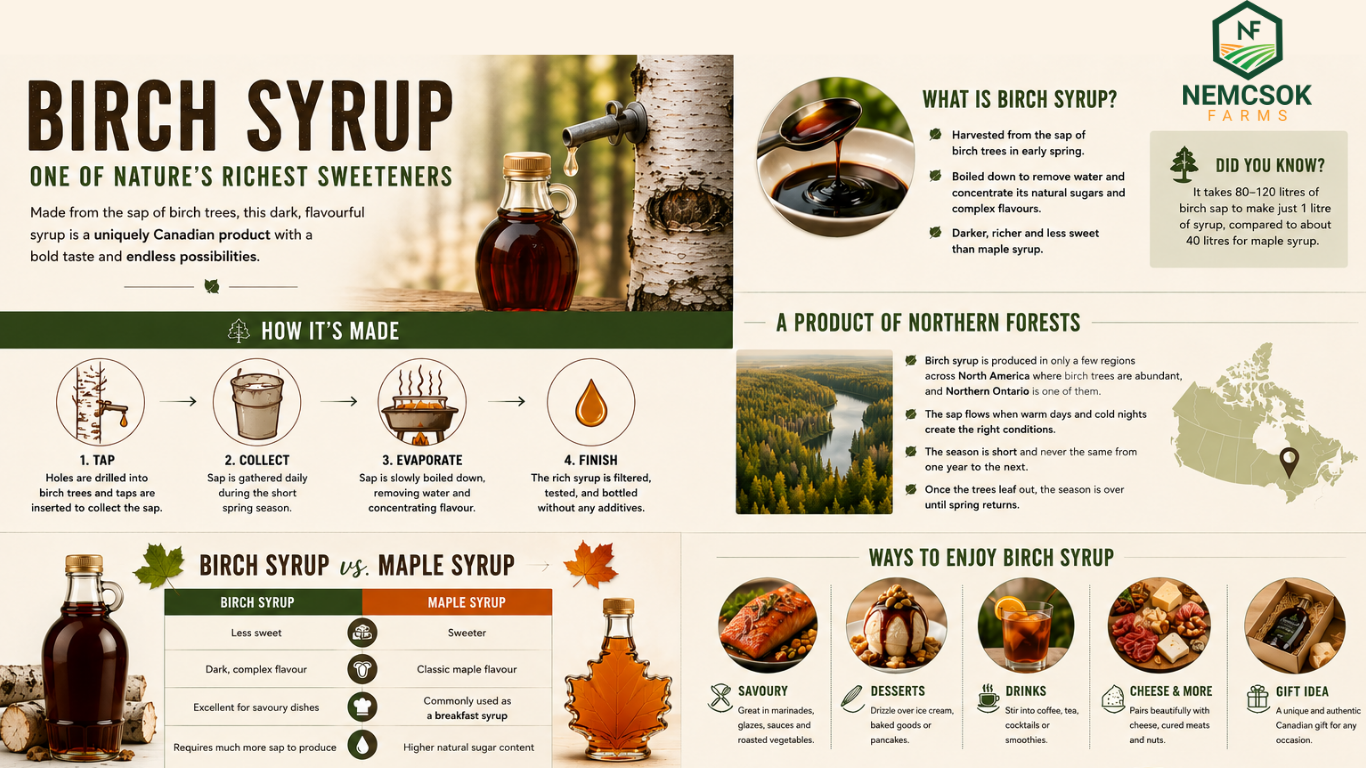
If you’ve ever wondered why birch syrup costs more than maple syrup, the answer starts long before the first bottle reaches a kitchen shelf. It begins in early spring, when birch trees wake up after a long Northern Ontario winter and sap begins to move through the tree.
Unlike maple syrup, which has become familiar to most Canadians, birch syrup remains one of the country’s hidden culinary treasures. It takes more time, more sap, and more patience to produce, but the result is a rich, complex syrup unlike anything else.
It Starts with Birch Trees
Not every tree can produce syrup. Birch syrup comes from mature birch trees that are healthy enough to produce a reliable sap flow each spring.
As daytime temperatures begin climbing above freezing while nights continue to fall below zero, pressure changes inside the tree create the conditions needed for sap to flow. This freeze-thaw cycle creates a short but productive season.
The birch sap season arrives after maple season has ended. While maple producers are putting away their equipment, birch producers are just getting started.
Collecting Birch Sap
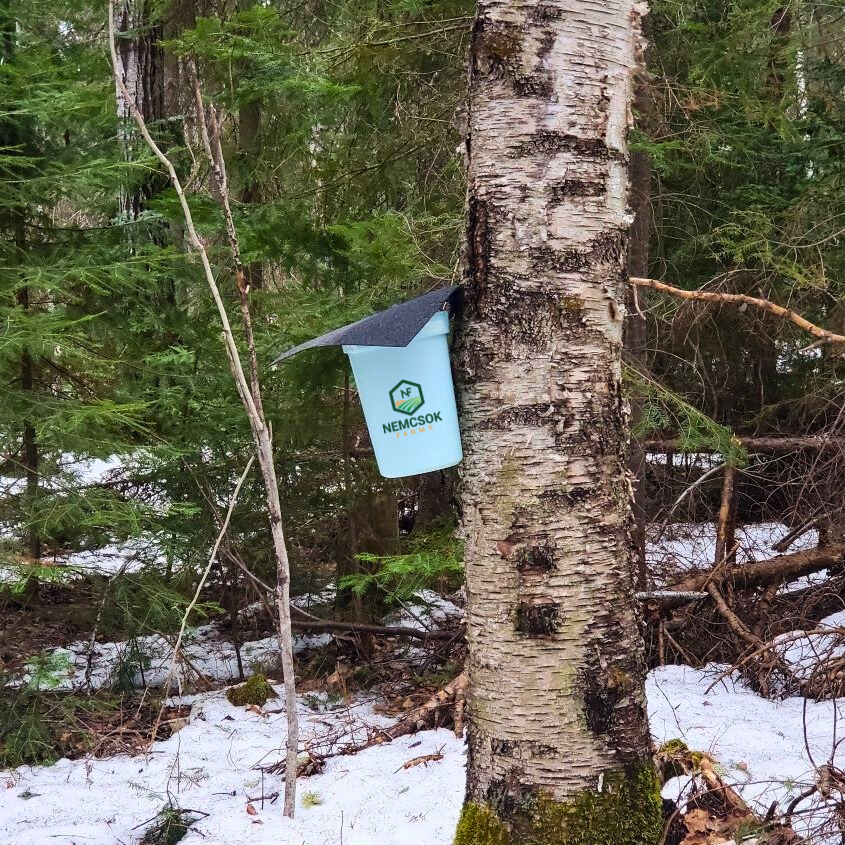
Each producing birch tree is tapped with a drill, where food-grade spiles are inserted. Buckets or collection systems catch the clear sap as it slowly drips from the tree.
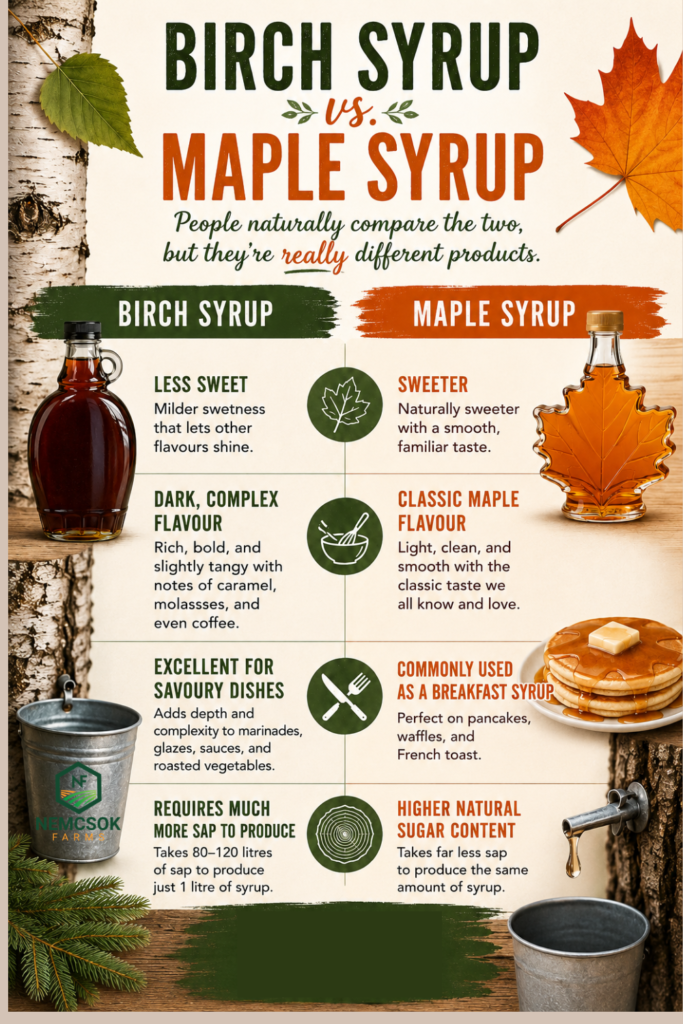
Birch sap contains far less sugar than maple sap, meaning enormous quantities are required to make a single gallon of syrup. While exact yields vary from season to season, it can take between 80 and 120 litres of birch sap to produce just one litre of finished syrup.
From Sap to Syrup
Once the sap has been collected, it needs to be processed as quickly as possible. Unlike maple sap, birch sap contains sugars that begin to change soon after collection, so producers don’t have the luxury of letting it sit for several days before boiling. During evaporation, water is slowly removed from the sap, concentrating both the natural sugars and the distinctive flavours that make birch syrup unique.
Boiling birch sap requires careful attention throughout the process. As the water evaporates and the sugars become more concentrated, the syrup can scorch if temperatures aren’t carefully managed. It’s not difficult, but it does require patience and a close eye on the evaporator.
Over the course of several hours, the clear sap gradually transforms into a dark, rich syrup with the complex flavour that makes birch syrup so distinctive. It’s a slow process, but one that’s well worth the time.
Why Birch Syrup Tastes Different
Birch syrup has a very different flavour from maple syrup. Rather than being sweet and mild, it has a rich, complex taste that people often describe as slightly tangy, with hints of caramel, dried fruit, molasses, balsamic vinegar, and even coffee. The exact flavour varies from one batch to the next, influenced by the weather, the growing season, and the trees themselves.
When people ask me what it tastes like, I usually say that birch syrup is to maple syrup what barbecue sauce is to ketchup. They’re both syrups, but that’s about where the comparison ends. If you’ve ever had the pleasure of eating crème brûlée, you’ll probably recognize that same bittersweet, torched caramel flavour.
That’s also why it works in so many different recipes. It can add something to a barbecue sauce or salad dressing just as easily as it can to cookies, cakes, or ice cream. I even use it in place of vanilla extract in many of my own recipes. Once you have a bottle in the cupboard, it’s surprising how often you’ll find yourself reaching for it.
Birch Syrup in the Kitchen
Because of its rich flavour, birch syrup shines in savoury dishes as much as sweet ones.
Try using it in:
- Salad dressing
- Marinades
- Barbecue sauce
- Glazes for salmon or chicken
- Roasted vegetables
- Ice cream
- Cheesecake
- Cocktails
It can also replace honey, molasses, or brown sugar in many recipes when you want a deeper, more robust flavour. A simple drizzle of birch syrup over roasted carrots or grilled squash is often enough to convince someone they’re tasting something completely new.
Why It Costs More
One of the most common questions producers hear is why birch syrup costs more than maple syrup.
Quite simply, it takes significantly more sap and quite a bit of work. Most birch stands were not planted on a handy sugar bush grid, so the trails and the upkeep on them can be a challenge as well, but so worth it. Also, the production season is shorter, the syrup requires careful attention during evaporation, and the finished yield is much smaller.
When people understand the work behind each bottle, they begin to appreciate that they’re buying more than a sweetener—they’re buying one of Canada’s most labour-intensive forest products.
A Product of Northern Forests
Birch syrup is produced in only a handful of places across North America where birch trees grow in sufficient numbers, and Northern Ontario is one of them. Our boreal forest provides an ideal environment for paper birch and yellow birch, both of which can be tapped for sap.
Like maple syrup, birch syrup depends entirely on the weather. The sap begins to flow only when daytime temperatures climb above freezing and nights remain below zero. Those conditions may last for several weeks one year and only a few days the next, so producers have to make the most of the season while it lasts.
That short window is one of the reasons birch syrup remains relatively uncommon. Once the trees begin to leaf out, the chemistry of the sap changes and the season is over. There are no second chances until the following spring, making every bottle a product of a very brief harvest.
Bringing the Forest to Your Table
Birch syrup isn’t likely to replace maple syrup on the breakfast table, and it doesn’t have to. The two syrups are very different, both in flavour and in how they’re used. While maple syrup is known for its sweetness, birch syrup is valued for its rich, complex flavour that works just as well in savoury cooking as it does in desserts.
Whether you’re looking for a unique Canadian product, experimenting with new recipes, or simply curious about one of our lesser-known forest products, birch syrup is worth trying. Once you understand how it’s made and taste it for yourself, it’s easy to see why chefs and home cooks alike have embraced it.
At Nemcsok Farms, our birch syrup is collected during the short Northern Ontario sap season, evaporated in small batches, and bottled right here on the farm. It’s made from one ingredient—birch sap—and nothing else. Every bottle represents a short harvest season, many hours of work, and a product that can only be made for a few weeks each spring.
If you’ve never cooked with birch syrup before, start with a favourite recipe and substitute it anywhere you might normally use honey, molasses, or maple syrup. You may be surprised by just how much flavour a small amount can add.
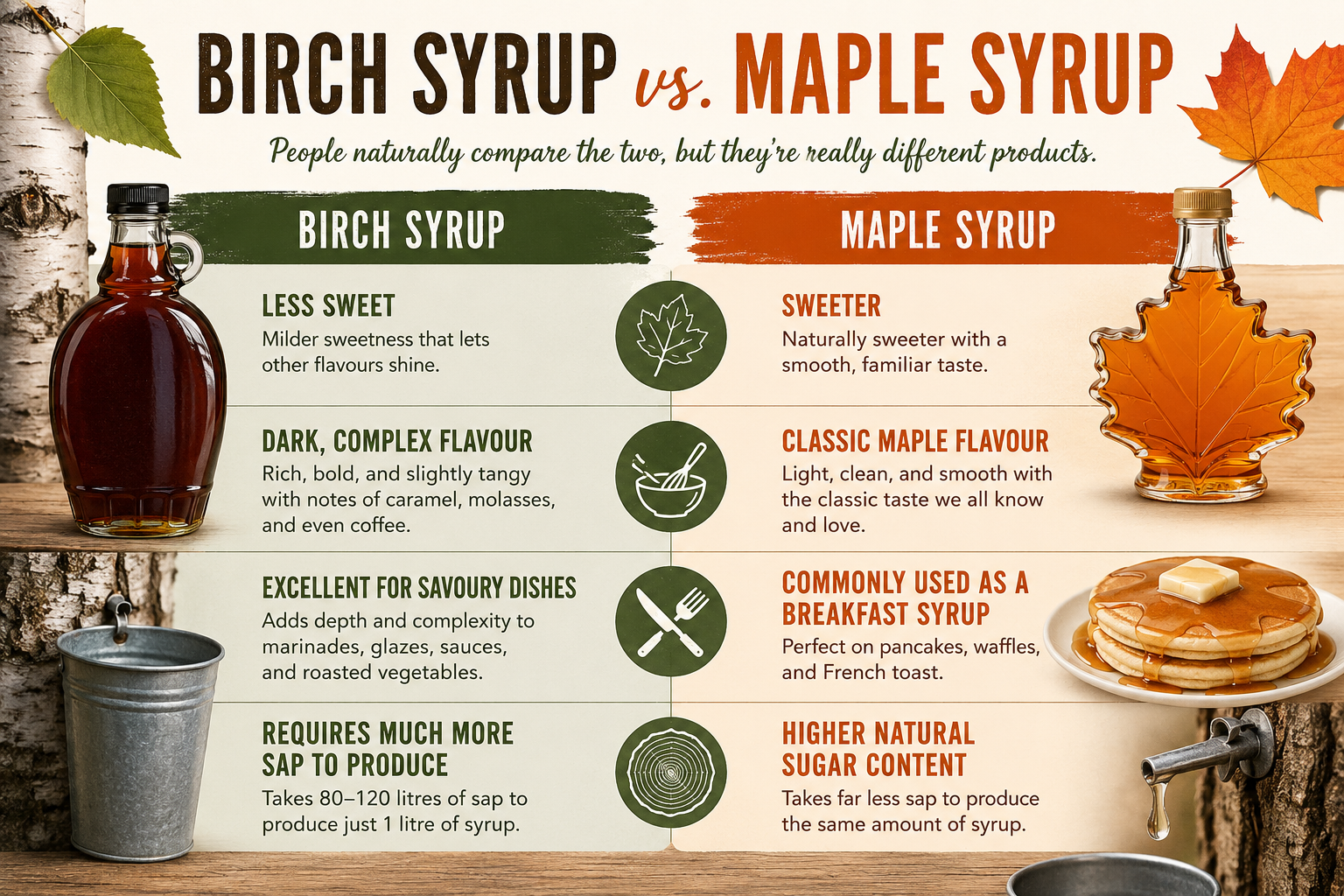
Birch syrup vs. maple syrup
People naturally compare the two, but they’re really different products.
Learn more:
- 100% Canadian Birch Syrup: Nature’s Richest Sweetener
- Shop
- Birch Syrup Recipes
- About Us
- Coffee
- How to Buy Farm Fresh Chicken Near Me
If you’d like to learn more about the science behind sap production and the differences between maple and birch syrup, the Cornell Maple Program has an excellent overview.